CLP Coffee & Bites

Join Us at the American Academy of Pediatrics 2025 National Conference and Exhibition

We are excited to participate in the American Academy of Pediatrics 2025 National Conference & Exhibition from September 26 – 30, 2025, in Denver, CO. This premier event is the largest gathering of pediatric professionals, offering cutting-edge education, innovation, and networking opportunities.

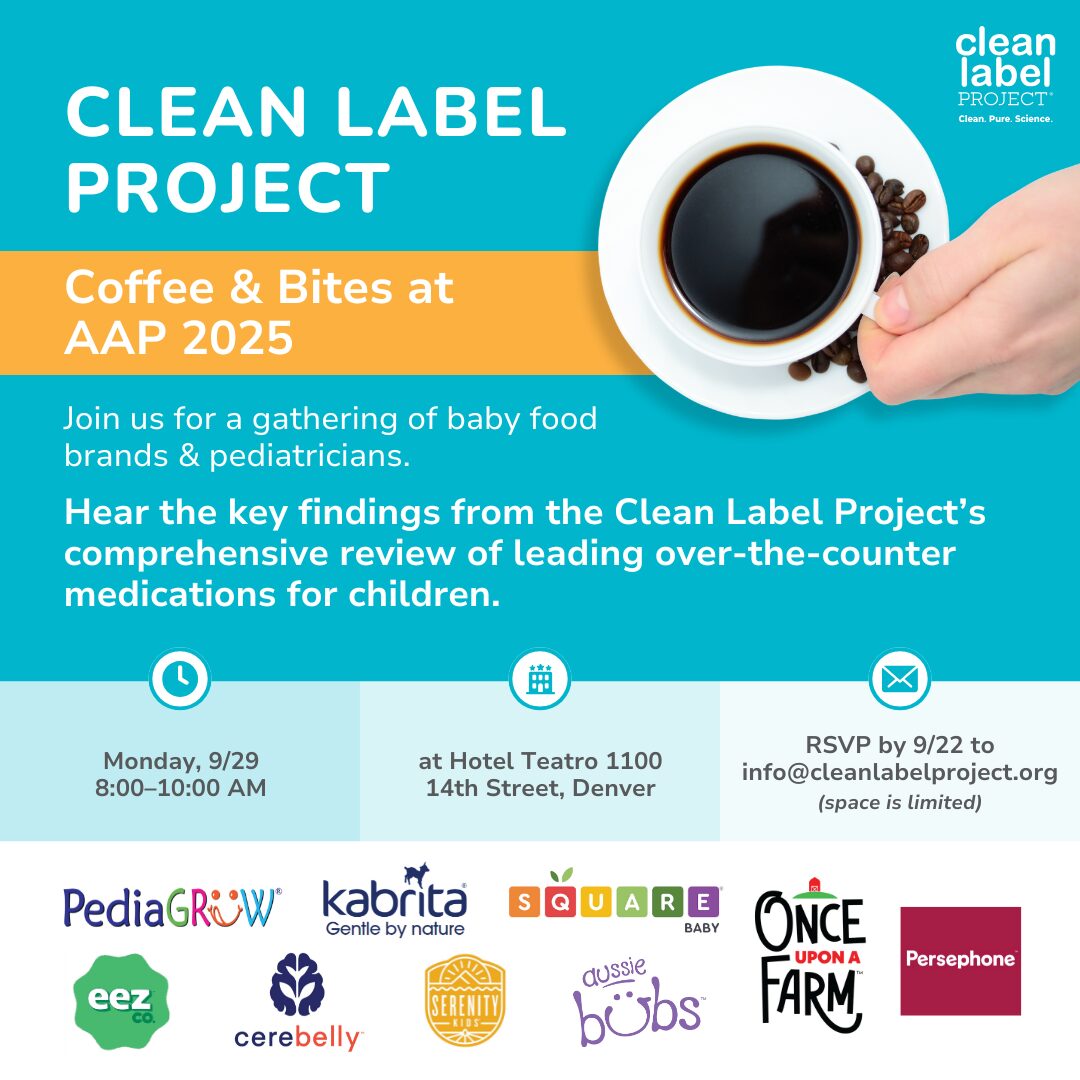
Clean Label Project Coffee & Bites at AAP 2025

To RSVP for this event, please fill out the form below:

About the Clean Label Project

Who We Are

The Clean Label Project is a national nonprofit organization dedicated to bringing truth and transparency to consumer product labeling. Our mission is to educate consumers, advocate for better standards, and hold brands accountable for the safety and purity of their products. Through rigorous scientific testing and research, we analyze food, beverages, and consumer products for industrial and environmental contaminants, including heavy metals, pesticide residues, and plasticizers.
Here To Support Your Practice

The Clean Label Project, in partnership with the Baby Coalition, is dedicated to ensuring that your practice is ready for the upcoming changes in infant and child nutrition regulations, particularly in light of AB 899 and the FDA’s Closer to Zero initiative. Our mission is to provide clear, actionable information to help you guide your patients through these new standards with confidence.

About the Baby Coalition

The Clean Label Project Baby Coalition

The Baby Coalition is dedicated to educating consumers, retailers, fellow brands, and the medical and regulatory communities on the risks of environmental and industrial contaminant exposure. Our mission is to advocate for progressive legislative and policy issues, raise awareness of the risks associated with contaminants and other chemicals of concern, and work across the supply chain to promote better food and consumer products for vulnerable populations.

Improving infant, children, and maternal health through education on the risks of toxins and contaminants and advocating for reform.

Frequently Asked Questions

With new state regulations mandating the disclosure of heavy metal levels in baby food, alongside heightened consumer, media, and regulatory scrutiny, medical providers should anticipate an increase in questions from concerned parents and caregivers. Drawing on seven years of experience in addressing consumer inquiries, Clean Label Project—a national nonprofit dedicated to transparency in product labeling and the organization behind the largest study on heavy metals in baby foods and infant formula—has identified the top questions providers may face. This resource turns complex issues into actionable advice, empowering informed decisions for children’s health.

What are heavy metals, and why are they in baby food?

Heavy metals like lead, arsenic, mercury, and cadmium are naturally found in soil and water, which can result in their presence in crops used for baby food. Heavy metals are in our food source – these metals aren’t added intentionally but can be absorbed by plants as they grow. They are of particular focus in baby food and infant formulas because babies are small, and the first 1000 days of life is an extraordinary time of brain and immune system development.

Commercial baby foods and formulas are generally safe. Offering a variety of foods is a smart way to minimize potential exposure to heavy metals from any one source.

Long-term exposure to high levels of heavy metals can impact brain development and disrupt other bodily functions, but occasional low-level exposure is generally not harmful.

Offer a diverse range of foods, especially those rich in iron and calcium, to support the reduction of heavy metal absorption. Choose products featuring the Clean Label Project certification seal, which indicates that brands are committed to sourcing ingredients and formulating products with stringent measures to minimize heavy metals and other contaminants.

Homemade foods can be a good option, but generally, heavy metals are naturally present in soil and water. This means they can be found in both store-bought and homemade baby food.

Organic baby foods may have lower levels of pesticides but are not necessarily free from heavy metals, which are present in the environment. The issue of heavy metals is applicable to all foods.

Rice-based products should be limited, but they don’t need to be entirely avoided. Alternatives like oats and barley can be offered.

If you have concerns, let’s talk about your child’s potential exposure risks and whether testing might be beneficial. While food is one possible source, other exposure routes could include water, soil, and even paint, particularly in older homes.