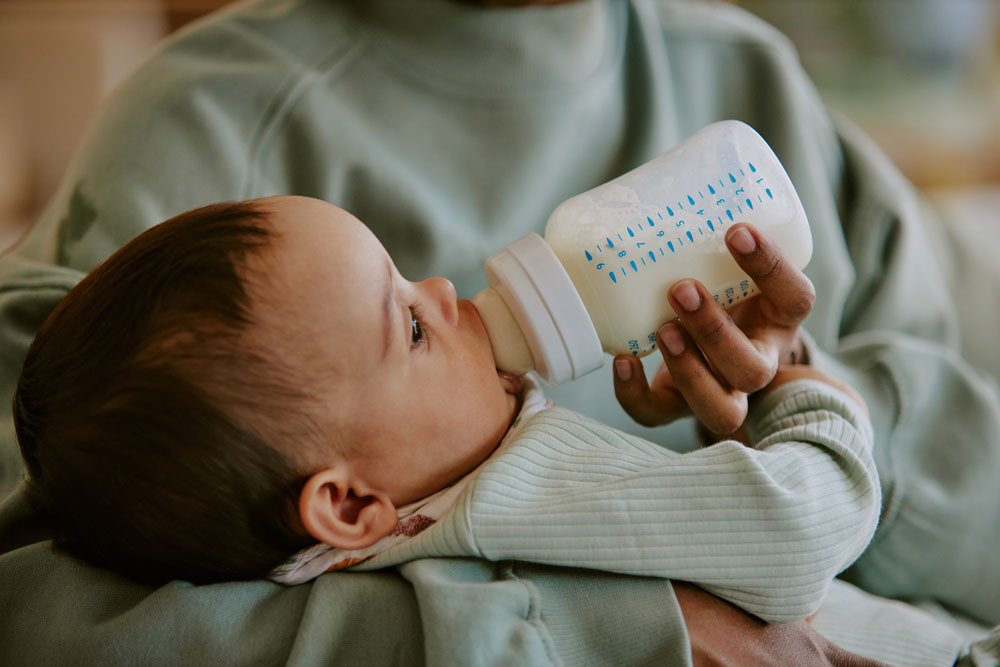
Parents around the globe are feeding their infants formula multiple times a day, relying on infant formulas to provide essential nutrition for their children. They expect the products to be free from harmful industrial chemicals.
At Clean Label Project, we don’t take safety at face value — we rely on data and scientific evidence to uncover what substances consumers are actually exposed to. Our mission is to promote and protect transparency.
Harmful germs—also called pathogens—can contaminate food and make people sick. They can come from bacteria, parasites, viruses, etc. Salmonella, E. coli, Listeria, botulism, and norovirus are just some examples of pathogens commonly associated with outbreaks and serious illness.
In the United States, the FDA and USDA-FSIS regulate pathogen-related food safety. Food manufacturers also rely on independent labs, audits, certification bodies, and consultants. Together, these agencies help protect public health by ensuring steps are taken to prevent outbreaks caused by harmful germs.
But pathogens aren’t the only concern. Food can contain harmful levels of heavy metals, pesticides, phthalates, and other chemicals that are not always regulated or routinely tested. The Clean Label Project (CLP) addresses this gap by evaluating products for these additional contaminants.
To earn and maintain CLP certification, a product must meet—or exceed—FDA pathogen food safety standards and remain in good standing. If a CLP-certified product is recalled in the event of a pathogen outbreak, its certification is suspended and the product is removed from our website.
Discover verified products tested by Clean Label Project, build smarter grocery lists, and stay informed with the latest health and food safety news.


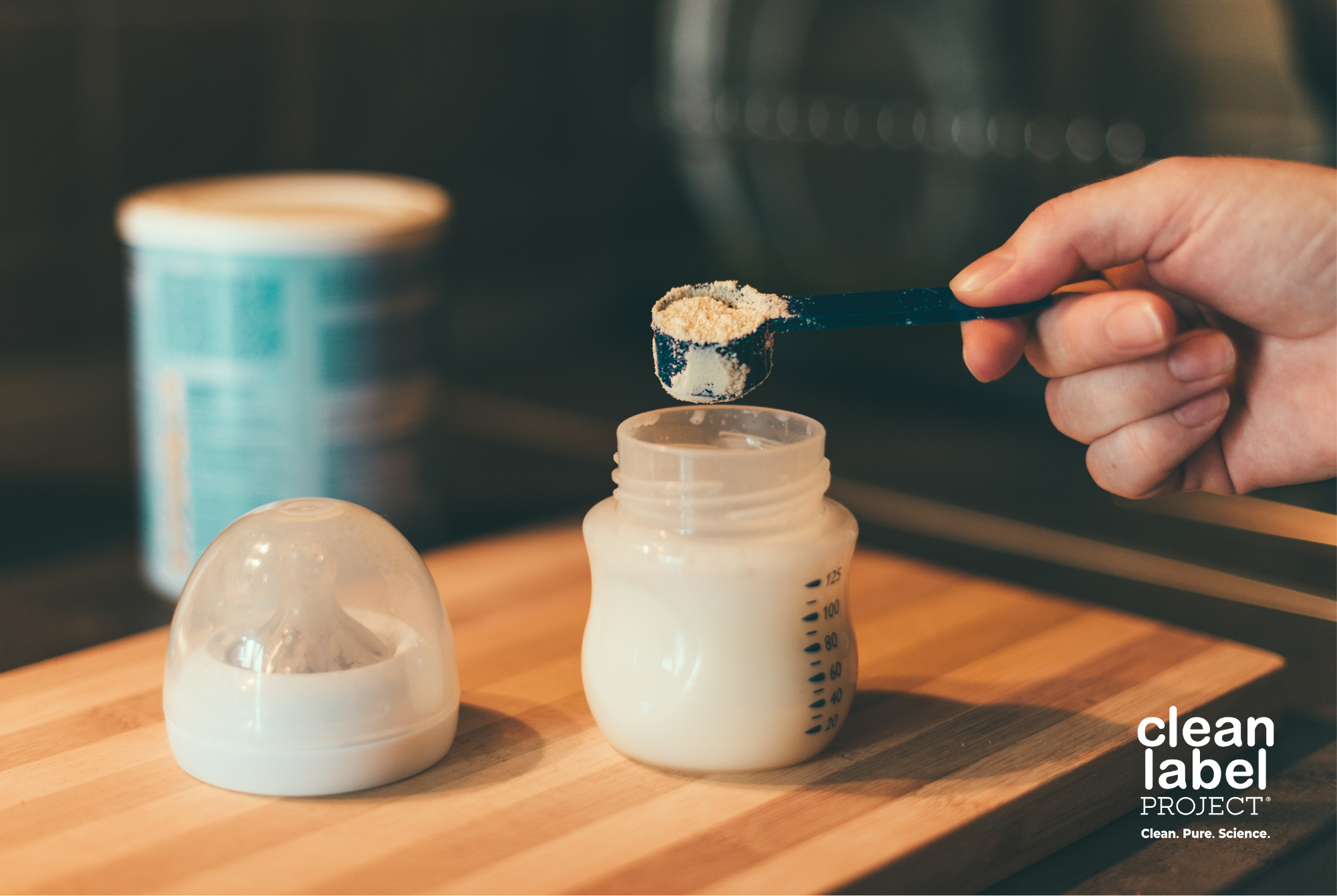
Clean Label Project purchased and rigorously tested 59 of the top-selling legacy and WIC approved infant formulas, sourced from both retailer and state WIC government data. This includes 19 Legacy products from top-selling retail and WIC-approved brands, and 40 Non-Legacy products.
The scope of testing assessed multiple panels of industrial and environmental contaminants. Collaborating with Ellipse Analytics, an ISO 17025-accredited analytical chemistry lab, Clean Label Project amassed over 9,000 data points from those 59 products to benchmark the findings.
Infant formulas evaluated by Clean Label Project showed detectable levels of phthalates DBP (di-n-butyl phthalate) and DEHP (di(2-ethylhexyl) phthalate).
To put this into perspective, Clean Label Project’s partner lab, Ellipse Analytics, tested more than 40 infant formula products for certification across 2025 – during those tests, only one product reported trace levels of DBP (<1 ppb), and just four tested positive for DEHP. None of these infant formulas tested positive for either BPA or BPS.
Discovering DBP and DEHP in more than 90% of our infant formula category study samples prompted us to investigate the various pathways through which these plastic chemicals (phthalates and bisphenols) could enter infant formula products.
Of the products tested:
| DBP | Samples Tested | Low | High | Mean | # of Hits | % of Hits |
|---|---|---|---|---|---|---|
| Category | 59 | 0.0 | 13.1 | 1.0 | 7 | 11.9% |
| Legacy Products | 19 | 0.0 | 13.1 | 3.2 | 6 | 31.6% |
| Non-Legacy Products | 40 | 0.0 | 0.8 | 0.0 | 1 | 2.5% |
| DBP | Samples Tested | Low | High | Mean | # of Hits | % of Hits |
|---|---|---|---|---|---|---|
| Category | 59 | 0.0 | 39.6 | 7.4 | 21 | 35.6% |
| Legacy Products | 19 | 0.0 | 39.6 | 14.3 | 18 | 94.7% |
| Non-Legacy Products | 40 | 0.0 | 7.1 | 0.4 | 3 | 7.5% |
DBP (Di-n-butyl phthalate) and DEHP (Di(2-ethylhexyl) phthalate) are plastic chemical phthalates, or plasticizers, and studies have shown they act as endocrine disrupters that can also cause reproductive and developmental harm in children.
Health risks include reduced male fertility, developmental problems in children such as changes in growth or behavioral patterns, and increased risks for obesity, type 2 diabetes, and allergic diseases. These chemicals can be absorbed through skin contact, inhalation of
dust and air, or ingestion from contaminated products and are of particular concern for children and during pregnancy.
There are no comprehensive federal regulations specifically addressing dietary exposure to industrial chemicals in food and medicine, as most safety measures concentrate on physical and microbiological contaminants.
There are no actual federal restrictions on the usage of DBP and DEHP.
Every year, Clean Label Project conducts 8-12 category studies, which continually find a high percentage of samples containing phthalates. DEHP appears on the FDA’s GRAS list and, due to its role as a plasticizer enhancing plastic flexibility, is commonly found in components of machinery used in food and consumer goods production, including industrial belts, processing equipment, bottles, bags, gaskets, etc…
Over the past decade, the Clean Label Project has analyzed bisphenols (BPA and BPS) across a range of product categories. While BPA and BPS were frequently found in earlier studies, they are now rarely detected. Given this, the detection of bisphenols in 21% of legacy and WIC approved infant formula products is unexpected.
DBP (di-n-butyl phthalate) and DEHP (di(2-ethylhexyl) phthalate) can contaminate infant formula products through several different pathways.
DBP can leach into infant formula primarily through migration from plastic packaging and food processing equipment.
DEHP is a plasticizer used to make plastics more flexible. It can enter food products through processing equipment and packaging materials, or through other environmental contamination. DEHP is not chemically bound to plastics, so it can easily leach into food, especially fatty or oily foods, and its migration is often increased by heat. DEHP is part of the FDA’s GRAS (Generally Recognized As Safe) list. Our research has found DEHP in many different categories we’ve tested, such as protein powder, cereal, and snack bars.
Clean Label Project partnered with the independent analytical chemistry laboratory, Ellipse Analytics, to test six panels of industrial chemicals:
The heavy metals (arsenic, cadmium, lead, and mercury), were tested by Inductively Coupled Plasma – Mass Spectroscopy (ICP-MS); Phthalates were tested by Gas Chromatography – Mass Spectroscopy (GC-MS/MS); and Bisphenols, glyphosate, and pesticides were
tested by Liquid Chromatography – Tandem Mass Spectroscopy (LC-MS/MS).
Our mission is to empower consumers by delivering accurate and reliable product information based on our testing and analysis of the products they buy.
This data enables consumers to make informed choices that prioritize safety and quality in the infant formula they purchase.
“We have the data to inform the standards for infant formula—products that nourish our most vulnerable population,” said Molly Hamilton, Executive Director of Clean Label Project. “It’s critical that we update these standards to ensure formulas are both nutrient-dense and clean to support the long-term health of our children.”
The following companies have infant formulas that are Clean Label Project Certified and are some of the top infant formula products in the market: