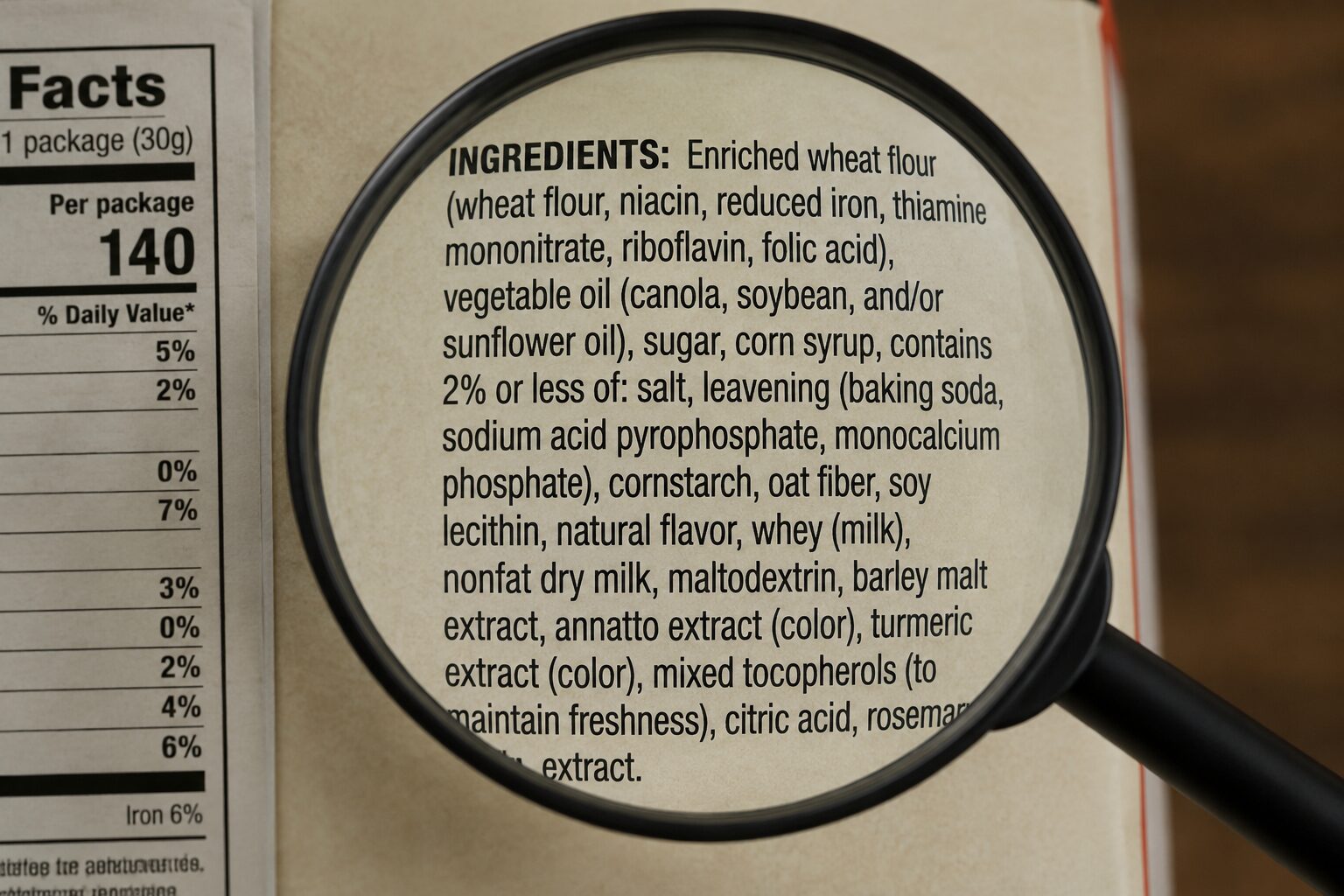
What if one of the easiest ways to reduce your exposure to hidden contaminants was as simple as choosing foods with fewer ingredients?
To find out, Clean Label Project—the nonprofit organization bringing transparency to food and consumer products—partnered with Ellipse Analytics, the laboratory behind the world’s largest database of hidden contaminants in consumer products, to examine how food processing and ingredient count in packaged foods relates to contaminants such as pesticides, heavy metals, and other chemicals of concern.
What they discovered could change the way you shop: the fewer the ingredients, the lower the contaminant load.
An analysis of more than 4,000 consumer packaged food products tested for Clean Label Project between 2017 and 2026 found a statistically significant relationship between the number of ingredients in a product and its level of contamination. Put simply, products with longer ingredient lists tend to contain higher levels of environmental and industrial contaminants, including heavy metals, bisphenols, phthalates, and other toxic substances.
The findings suggest that as foods become more manufactured and formulated—with more ingredients, additives, and processing steps—they also become more likely to contain measurable levels of contaminants. The reasons may vary, including:
- Supply Chain Complexity
Each ingredient in a packaged food product follows its own sourcing and production pathway before reaching the final product. Along the way, there are multiple points where contaminants can be introduced—from how it’s grown, to how it’s processed, handled, transported, and stored. As the number of ingredients increases, so do the potential points of exposure.
- Farming Practices
Ingredients like corn, soy, and wheat are widely used in processed foods and are commonly grown (or dried) with pesticides and herbicides, including glyphosate. The residues of those chemicals make it into the final product.
- Heavy Metal Accumulation
While a single ingredient may contain elevated levels of one particular heavy metal—such as cadmium in chocolate or arsenic in rice—products made with more ingredients have increased chances for a wider range of heavy metals to be present. Their combined contribution can lead to significantly higher overall levels.
- Manufacturing
The more processed a product is, the more it comes in contact with chemicals used to enhance, stabilize, or extend its shelf life. It also passes through production equipment that relies on chemicals for everything from cleaning to operating. Each step adds another possible way for contaminants to enter the final product.
- Packaging
What’s packaged food without packaging, made with materials that are loaded with chemicals designed to preserve food and prevent spoilage. Substances can migrate from the packaging into the food itself – from the inks used in the colorful designs to the endocrine-disrupting phthalates that make the material flexible.
These findings point to a simple takeaway: prioritize whole, minimally processed foods whenever possible, and when choosing packaged products, look for shorter, simpler ingredient lists.
Ultimately, the only way to know what’s really in your food is to choose brands committed to reducing contaminants. That includes sourcing ingredients grown in cleaner soil, using responsible manufacturing practices, and turning to independent third-party testing.
For more than a decade, Clean Label Project has worked to advance transparency in the everyday products we consume.