Is your most valuable asset-your brand name-in the hands of a manufacturer you don’t control?

One in four products on U.S. grocery shelves is now private label, representing more than $282 billion in annual sales, according to the Private Label Manufacturers Association (PLMA). Growing nearly three times faster than national brands, private label is increasingly driven by consumers seeking value, quality, and added benefits.


But with that growth comes a significant risk: retailers own the private label brand, but third-party manufacturers often control the ingredients, sourcing, production—and whether or not products are tested for hidden environmental and industrial contaminants.


When something goes wrong, consumers don’t distinguish between the brand name and the manufacturer. They see the name on the package—and that’s who they remember.

THE RISK OF MANUFACTURING WITHOUT FULL CONTROL

Reputational Risk

Contamination is associated with the retailer-not the manufacturer.

Consumer Risk

Contamination can harm the consumers who trust the private label brand they purchased–and once that trust is lost, it’s difficult to regain.

Recall Risk

Contamination can lead to recalls, lost sales, destroyed products, and costly investigations.

Consumer Trust

One contaminated SKU can undermine confidence in an entire private-label portfolio.

Oversight Risk

Traditional audits and quality protocols may not identify contaminants outside routine testing programs.

Competitive Risk

A contamination event can drive consumers toward national brands perceived as safer–or other retailers.

Portfolio Risk

One manufacturer, supplier, or ingredient can impact multiple SKUs and categories.

Media Risk

Contamination can quickly become a public story—putting the brand under intense scrutiny across the news and social media. That scrutiny can erode trust far beyond the affected product, impacting the retailer’s broader business.

As private-label portfolios expand, retailers need to ask:

What independent safeguards are in place to ensure the manufacturers producing their products are protecting the private label brand name on the package?

GOING BEYOND TRADITIONAL FOOD SAFETY

Traditional food-safety and quality programs are essential, but they do not address contaminants such as pesticides, heavy metals, phthalates, bisphenols, and other environmental and industrial contaminants.


Clean Label Project® is a nonprofit dedicated to reducing contaminants in the products consumers use and consume every day through independent, third-party laboratory testing. Clean Label Project® certification gives retailers and consumers science-backed assurance about what’s in the products they sell and buy.

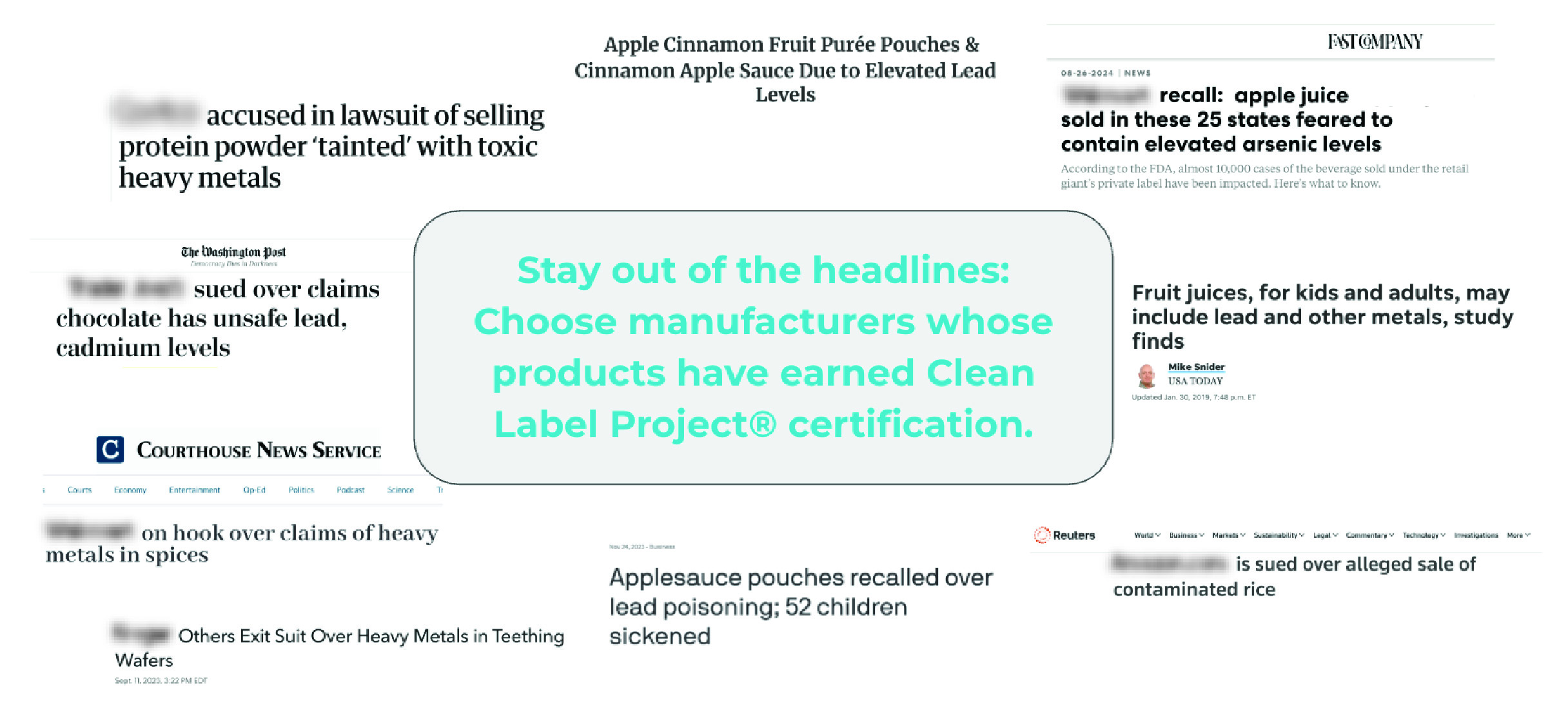
Stay out of the headlines: Choose manufacturers whose products have earned Clean Label Project® certification.

For retailers, independent verification provides something manufacturer assurances alone cannot: an objective check that products carrying their name meet the standards they expect.

AN OPPORTUNITY FOR PRIVATE-LABEL MANUFACTURERS

This gap also creates an opportunity for manufacturers to differentiate themselves and win coveted retailer private label business.


In a crowded private-label marketplace, Manufacturers that proactively address contaminants and embrace independent, third-party verification give retailers greater confidence—and a reason to choose them over competing suppliers.


Going beyond traditional food safety isn’t just risk mitigation. It’s a competitive advantage.

  • Win More Business

    Go beyond the status quo. Differentiate your products with Clean Label Project® Certification and gain a competitive edge when pursuing private-label and co-manufacturing contracts.
 
  • Reduce Risk to Retailers & Brands

    Give retailers and brands trusted, independent verification that strengthens confidence in your products.
 
  • Proof Over Promises

    Replace claims with quantifiable proof through independent testing.
 
  • Protect Your Investment–and Your Customer’s

    Identify potential contamination risks before they become recalls, lost sales, or reputational damage.
 
  • Justify Premium Positioning

    Premium pricing demands premium products backed by independent verification.

Clean Label Project® works with private-label manufacturers to use independent testing and certification to differentiate their products, strengthen retailer relationships, and become the supplier retailers trust to protect their brand-and their consumers.